











Super Tilt Bro. for NES
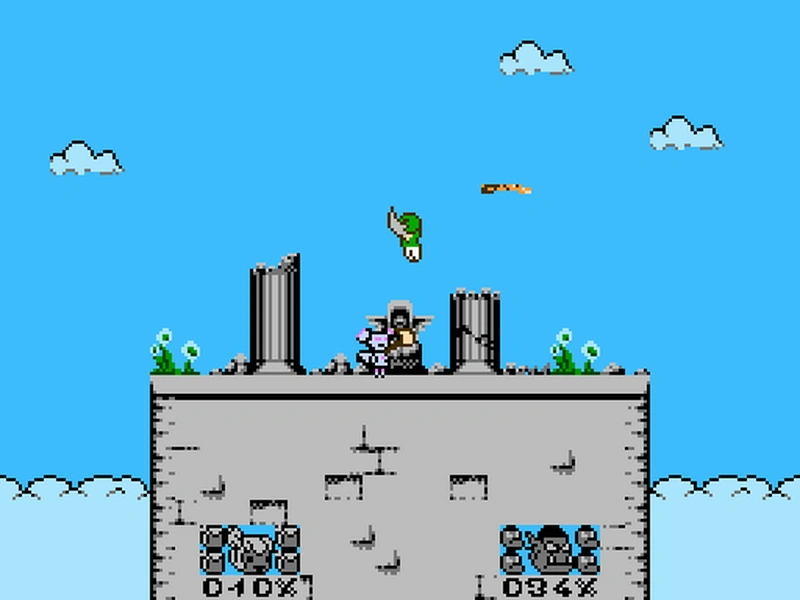
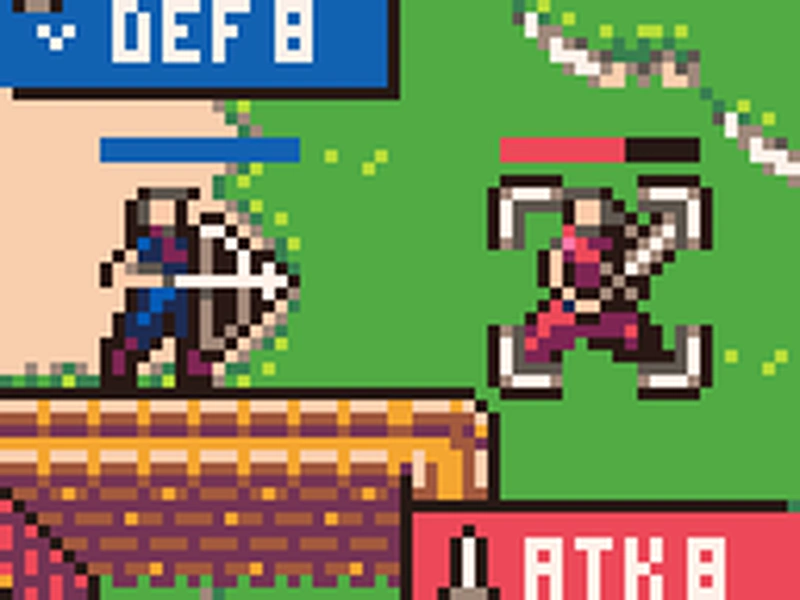
If you have ever dreamed of experiencing an authentic, modern-feeling fighting game on original 8-bit hardware, then Super Tilt Bro. for NES is exactly what you need. This incredible title is a dedicated demake of the legendary Super Smash Bros. series, built specifically to be compatible with the good old Nintendo Entertainment System from the 1980s. Far from being just a simple retro tribute, this nes brawler implements features that are typically reserved for contemporary releases, bridging the gap between nostalgic aesthetics and modern connectivity.
The developers have gone above and beyond to ensure that this homebrew title provides an incredibly robust platform-fighting experience. You will find that it captures the exact essence of percentage-based damage and thrilling ring-outs, all while introducing a roster of brand-new characters and beautifully crafted pixel art stages. The project proves that 8-bit hardware still has hidden potential, especially when pushed to its absolute limits by passionate developers.
Wi-Fi Cartridge
One of the most groundbreaking aspects of this homebrew project is its physical release. It is not just a standard piece of plastic; the cartridge contains genuine modern engineering to connect your 1980s console to the internet.
- Integrated Chip: The physical cartridge features an integrated Wi-Fi chip built directly into the board.
- Authentic Hardware: You can plug it into an unmodified, original Nintendo Entertainment System and connect to your home network.
- Online Updates: Players can actually receive game updates over the internet, patching the game to the latest version directly on the console.
- Seamless Integration: The assembly code interacts directly with the network hardware to manage connections without slowing down the action.
- Modern Cryptography: The system even manages modern cryptography protocols so you can safely log into your account and secure your ranking.
By blending an ESP8266 Wi-Fi chip with an FPGA, the development team has achieved what was once thought impossible: putting an 8-bit console from the 1980s seamlessly onto the modern web. You do not need a computer acting as a bridge; the cartridge itself handles the heavy lifting, connecting directly to the game's servers for matchmaking.
Rollback Netcode
Fighting games demand absolute precision, and lag can ruin the experience. To solve this, the developer successfully implemented sophisticated online architecture to guarantee that matches remain completely fluid.
- Resilient Architecture: The netcode is highly resilient to packet loss, minimizing stutters during intense combat.
- Frame-Based Ping: Ping is accurately measured in frames, offering precise feedback on connection quality.
- Automatic Resync: The impact of packet loss is limited to mere milliseconds before an automatic resync restores the game state.
- Smooth Experience: Ghost connections and miss connections are eliminated, meaning players will no longer face desyncs where one player goes to a game over screen while the other stays in-game.
- Rollback Mechanics: The rollback implementation predicts inputs and corrects them instantly if they differ from what the opponent actually pressed.
Implementing rollback on a processor from the 1980s is a monumental technical achievement. The system ensures that your inputs feel instantaneous, whether you are battling someone in the next town or across the globe.
Ranked Play
What is a modern fighting game without a competitive ladder? The game incorporates a fully functional competitive ecosystem designed to keep players coming back for more intense action.
- Match Making Rating: The game utilizes an MMR system to pair you with opponents of similar skill levels.
- Casual Modes: If you prefer to play without the pressure of a ranking, a dedicated casual mode is readily available.
- Worldwide Leaderboards: Your account logs your victories and defeats, placing you on an official global ranking list.
- Online Matchmaking: You can queue up directly from your console and the server will locate a challenger.
- Solo Story: For those who want to practice before going online, there is a dedicated story mode and arcade ladder with AI opponents.
The community is continuously growing, making it easier than ever to find a match online. The addition of global leaderboards provides a satisfying sense of progression and competition, ensuring that the gameplay loop remains engaging long after you master the basic controls.
Directional Keys
Control scheme optimization is crucial when dealing with a vintage two-button controller. The developers have managed to squeeze a tremendous amount of depth out of a minimalist layout.
- Responsive Inputs: You can perform a wide variety of different moves simply by holding a direction when pressing the attack or special move button.
- Crucial Movement: Mastering the Directional keys is essential for executing precise combos and recovering from off-stage knockbacks.
- Input Buffering: The game allows players to buffer inputs during hitstun, making it easier to execute counter-attacks the exact frame you recover.
- End-Lag Cancels: Advanced players can cut the end-lag of certain attacks, increasing the fast-paced nature of the fights.
- Two-Button Combat: Despite having only two action buttons, the combination of Directional keys and context-sensitive timing yields an impressive array of tactical options.
Every character controls differently, demanding players to understand the unique timing and spacing required to succeed. By relying heavily on Directional keys to modify attack properties, the combat feels intuitive yet incredibly deep, mirroring the complexity of modern platform fighters.
Footstool Jump
The combat mechanics are constantly being refined, and the movement options are far more advanced than typical retro games. The mobility tools available to players completely transform how battles flow.
- Advanced Mobility: Players can utilize an aerial jump, wall jump, and special jump to navigate the diverse stage layouts.
- Player Bouncing: The game features a dedicated footstool jump, allowing you to use your opponent as a physical platform to launch yourself higher while pushing them downward.
- Off-Stage Battles: These movement mechanics encourage aggressive edge-guarding and daring off-stage skirmishes.
- Unique Roster: Characters like Sunny, Kiki, Sinbad, Pepper, Carrot, and the Video Game Sage each utilize these jumps differently.
- Strategic Stages: Stages like Deeprock, Skyride, and Break the Target are designed specifically to test your mastery of these traversal mechanics.
The addition of the footstool jump opens up entirely new combo routes and recovery interruptions. Whether you are using the witch Pepper, the close-combat focused Video Game Sage, or the versatile Sunny, understanding how to maximize your vertical mobility is the key to dominating the arena. The constant patches and balance updates ensure that the metagame is always evolving, cementing this title as a truly living, breathing retro masterpiece.
💬 0 Comments
Leave a Comment